Насосны хавтанг уншиж, регуляторын гэмтлийг элэгдсэн насосны биеэс ялгаж, засвар эсвэл солих эсэхийг шийдэх
A practical guide to excavator main hydraulic pumps: the four symptom groups and what each one actually means, how to read a tandem pump plate so the order matches, why regulator and solenoid faults are mistaken for a dead pump, and when a rebuild is worth it.
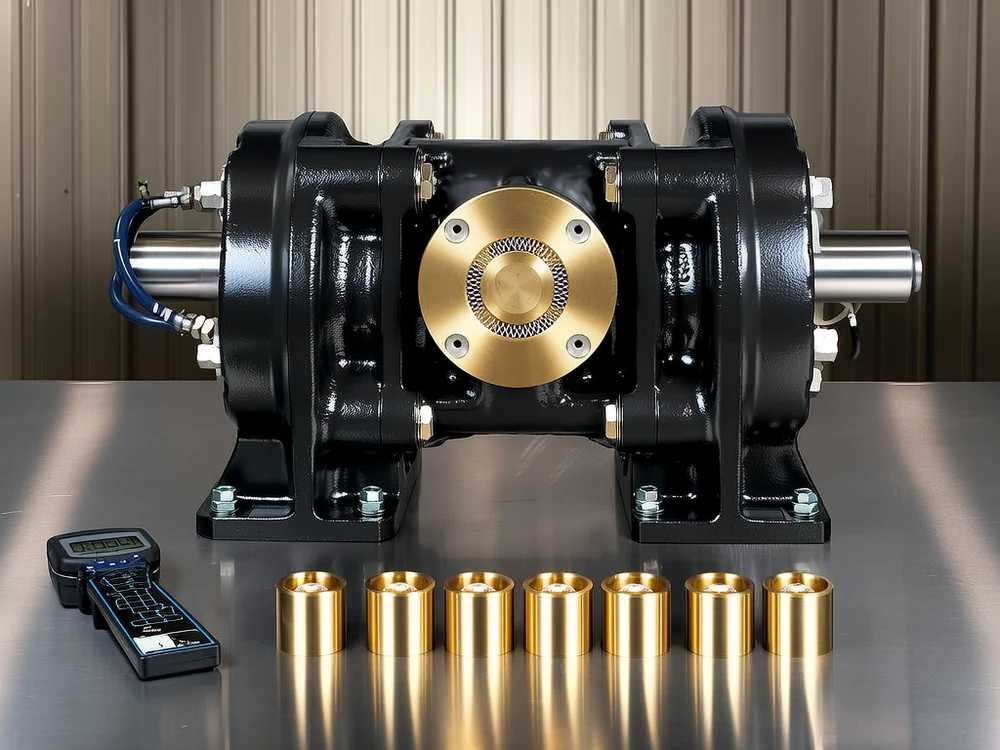
On a 20-ton excavator the main hydraulic pump typically accounts for 30 to 40 percent of the total value of the hydraulic components. It sits behind the engine flywheel housing, driven through a spline or a coupling, and in a tandem arrangement two pump bodies share a single input shaft. That shared shaft is why one worn piston group distorts the pressure and flow of the whole unit, and it is why the usual reaction is to replace the entire pump.
That reaction is also the most expensive one. More than half of the pumps sent to us for assessment were not worn out at all. They had a regulator problem, a solenoid problem, or a pilot circuit problem. Separate those three from a genuinely worn pump body before any money is spent.
One detail matters here: read the colour of the debris. Copper-coloured particles usually come from the valve plate or the slippers, while ferrous particles point to bearings or gears. Getting the colour wrong sends the repair in the wrong direction.
Ordering by machine model is the single most common cause of a wrong pump. Two CAT 320D machines from different years or serial ranges can carry different pump batches, and the PC200-7 and PC200-8 pumps are not interchangeable at all. The reliable method is a photo of the plate on the side of the pump body, which normally carries the brand, the series code, the displacement, the rotation direction and the serial number.
Displacement on the plate is normally given in cc/rev, with two figures for the front and rear bodies. Those two numbers are the most direct way to confirm the tandem specification.
The regulator converts pilot pressure into a change of swash plate angle. When it fails, the mechanical parts of the pump are still sound but the output flow is no longer controlled. The machine becomes slow, the engine labours, or pressure reads normal at no load and collapses under load.
The test is simple. Swap the two pilot hoses at the regulator. If the fault moves with the hoses, the problem is on the pilot side. If it stays where it was, the problem is in the regulator itself or inside the pump. That one step can save the price of a complete pump.
Solenoid valves behave the same way. A proportional solenoid with drifted coil resistance, or a connector with water ingress and green corrosion, will hold the pump at minimum displacement. Measure the resistance and inspect the connector before removing the pump.
The decision on a rebuild rests on the scoring depth inside the pump body, which can only be judged on the disassembled unit. Any conclusion drawn from photographs alone is unreliable.
1. Machine model and serial number
2. A clear photo of the pump plate showing brand, series code, displacement and serial
3. Front and rear displacement figures
4. Rotation direction, viewed from the input end
5. A description of the fault, including pressure readings, oil temperature and any noise
Once the plate photo arrives we check three things before quoting: whether the tandem specification matches the machine, which regulator and solenoid interface the unit uses, and whether the coupling should be replaced at the same time. The quotation follows that check, not the other way round.
Pumps shipped to Russia, Kazakhstan and Uzbekistan travel with their pressure test record and fitting notes. Rebuilt units are labelled as remanufactured and are never sold as new.
WhatsApp / Phone: +8615319433340
Telegram: +8613609129500
Email: [email protected] / [email protected]
