Excavator Centre Joint Leaks: Check Travel and Swing Before You Reseal

How the centre joint seal stack works, what a top leak versus a bottom leak tells you, and the three things that go wrong during refitting

Technical Guides 2026-11-04
AIAI Search Summary

A practical guide to the excavator centre joint: how the concentric seal stack separates the oil galleries, what a leak at the top, the bottom or both actually indicates, why travel drift and weak pilot pressure are mistaken for a failed centre joint, and how to judge whether resealing is enough.
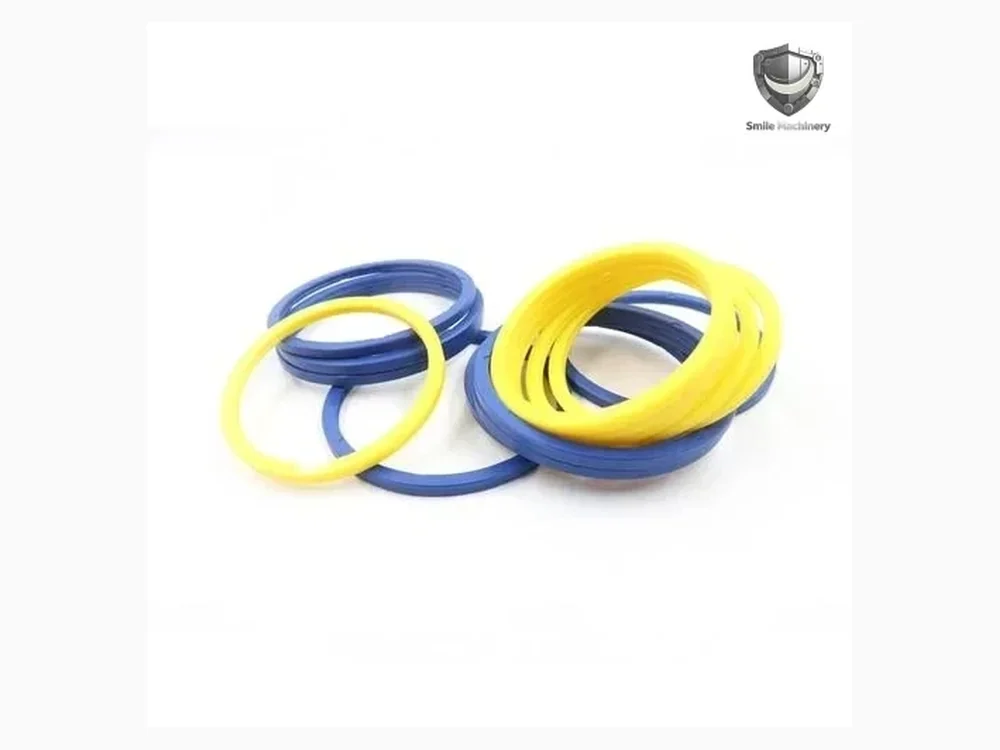
Excavator centre joint rotary joint seal kit

One Component Shared by Three Systems

The upper structure of an excavator turns through 360 degrees while the undercarriage travels in a straight line, and the only path between them is the centre joint. Pressure oil, return oil, pilot oil and the two travel circuits all pass through that one cylinder. Internally it is not a single bore but a set of concentric galleries, each separated from the next by a stack of seals.

That layout creates one characteristic behaviour: when a single layer in the middle of the stack fails, high-pressure oil crosses into the neighbouring gallery. The symptom is often not a visible leak at all, but a fault somewhere else entirely.

Where It Leaks Tells You What Failed

  • Leak at the bottom face, toward the undercarriage: usually the travel gallery seals. Travel runs at the highest pressure, so this layer fails first.
  • Leak at the top face, toward the upper structure: more often a return or pilot seal. The volume is small, but the deck stays permanently oily.
  • Both faces leaking, and getting worse: the stack as a whole has aged. This is not a single-layer problem and calls for a complete reseal.
  • No visible leak, but the machine drifts to one side, one track feels weak, or swing labours: oil is crossing between galleries internally. This is the hardest version to diagnose and the most often blamed on a travel motor.

Rule Out Two Things Before You Open It

This is where money is most often spent for nothing. Travel drift has two very common false sources.

  • Travel motor internal leakage: swap the two travel pressure hoses. If the drift follows the hoses, the fault is in the motor or the main valve, not the centre joint.
  • Low pilot pressure: insufficient pilot pressure stops the travel straight-travel valve from working properly and looks almost identical to internal cross-leakage. Measuring pilot pressure takes three minutes.

Only after both are excluded does opening the centre joint make sense. We have seen machines where the centre joint was resealed twice before the travel motor was identified as the cause.

Three Things That Go Wrong During Refitting

  • Seals fitted the wrong way round. Every seal in the stack has a defined orientation. Reversed, it does not leak immediately, but it fails within a week or two. This is the most common cause of repeat work.
  • Galleries misaligned. On reassembly the upper and lower galleries must line up. One port out of position leaves a circuit with no pressure at all. Photograph the alignment marks before dismantling.
  • Spacers and back-up rings left out, or fitted in the wrong order. These are thin parts that are easily lost during cleaning or mistaken for washers. Every piece in the kit has a position, and one missing piece means doing the job again.

Can It Be Fixed With Seals Alone?

The decision rests on the joint body itself. If the bore and the spindle land have been scored, show longitudinal grooves, or are no longer round, new seals will not last. They get cut by the grooves within a short time.

The check is simple. Draw the spindle out and run a finger across the land. A distinct step or groove means more than a reseal is needed. A surface that is merely polished or slightly dull usually means new seals are enough.

Five Items to Send Before Ordering

1. Machine model and serial number
2. Part number on the joint body, stamped or on its plate
3. Number and layout of galleries: how many pressure, how many return, whether pilot is included
4. Leak location: top, bottom or both
5. Whether travel drift, one-sided weakness or abnormal swing is present

How Smile Machinery Handles It

Once the model and photographs arrive we confirm three things: that the number of seal layers and their order match the original, that the kit includes the spacers and back-up rings, and whether the spindle needs to be assessed at the same time. The quotation follows that check.

Kits shipped to Russia, Kazakhstan and Uzbekistan include a stack layout drawing and fitting orientation notes. A reversed seal does not fail immediately, and by the time it does the best moment for a warranty conversation has usually passed, so we would rather send one extra drawing.

Contact Us

WhatsApp / Phone: +8615319433340
Telegram: +8613609129500
Email: [email protected] / [email protected]

Frequently Asked Questions

Can a leaking centre joint be repaired in the field?
The joint can be removed and resealed on site with basic tooling, but the galleries must be marked before dismantling and the seal stack must be laid out in order. If the spindle land is scored, the unit needs to be replaced rather than resealed, and that judgment cannot be made until it is open.
Why does my machine drift to one side instead of leaking oil?
Internal cross-leakage between galleries does not always reach the outside. Oil passes from the travel gallery into a neighbouring gallery and one track loses pressure. Swap the travel hoses first to separate a motor fault from a joint fault before opening anything.
How often should the centre joint seals be replaced?
There is no fixed interval. Replace on evidence: visible seepage at either face, travel drift that cannot be traced to the motor or valve, or a reseal done for another reason with an unknown history. Condition-based replacement is the practical approach.

← Back to News